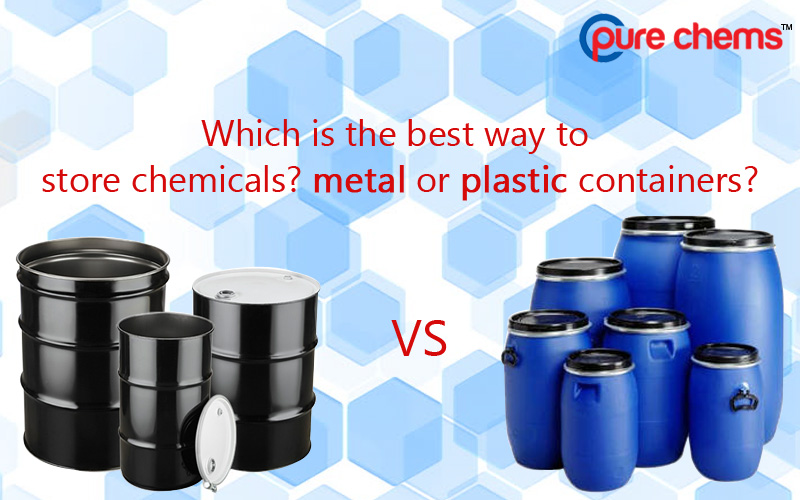
For Storing Chemicals - Metal Vs Plastic
One day or the other we all would have come across huge tankers with the label “Highly inflammable” snailing their way on highways, all that we tend to do is overtake them as soon as possible and feel safe. But you should also know that utmost precaution is taken to rule out all possibilities that point to a mishap.
Right from production to consumption each step has to be carefully taken so that the chemical is effectively put to use. If we leave out loss due to accidents, other challenges include, keeping away contaminants and storing chemicals in right containers. Once the right containers are identified for each chemical the next step is to rule out contamination.Lets take a closer look on the attention give to select the right container for various chemicals.
Factors to be considered while choosing containers
Resistance against corrosion-Metal or stainless steel is usually resistant to corrosion from acids & alkalies and specially stainless steel does not rust. High alloy grade metals have higher corrosion resistance which is preferred in environments with high chlorine content.
Resistance to Temperature
If the chemical to be stored is at a certain temperature or has to be maintained at a temperature, it is mandatory that the container shows exemplary strength; temperatures may be high or low.
Strength
Strength of the container plays an equally important role on par with choosing the right material. It would make sense only if the chosen material also has the strength (in terms of thickness) to withstand the corrosive property of the chemical for prolonged time periods.
Hygiene
Though it is economical to reuse cans it is also mandatory to prepare them for reuse with utmost hygiene.Only if it is possible to bring back required levels of hygiene it is worthwhile to invest in reusable containers.
Life span
A reasonable life span is expected if the chemical containers are to be used for bulk storage, shorter life spans will increase cost which need checks.
Coming to the comparison of Metal and Plastic drums,the below table brings out the advantages.
| Property | Metal | Plastic |
| Resistance against corrosion | * | **** |
| Environment friendly | ** | |
| Recyclable | ** | * |
| Stacking | *** | ** |
| Resistance to puncturing | ** | *** |
| Capacity to withstand impact | * | ** |
| Ease of handling | * | ** |
| Noise | * | **** |
| Price | * | ** |
On studying the above table its quiet abrupt that the advantages of plastic drum rides over metal containers when chemicals are dealt in bulk quantities . We should also take into consideration that there are chemicals which necessarily have to be filled in metal drums or galvanized drums to maintain high standards of purity. Only in circumstances where the chemical is compatible in both metal and plastic containers there is a choice, else safety and purity take an upper hand. Be it small quantity or bulk storage the rule is the same as far as choosing the right container is concerned
Given below is a table on compatibility of few chemicals with containers.
| Chemical | Compatible | Incompatible |
| Isopropanol | Glass, HDPE,PP, nylon and Teflon (PTFE) | ABS plastic |
| Acetone | Glass,metal,HDPE,PP, nylon & Teflon (PTFE) | ABS plastic |
| Methanol | Glass,HDPE,PP & PTFE | ABS plastic &polyurethane |
| Potassium hydroxide pellets | Stainless steel | Glass,metal & polyurethane |
| Hydrogen peroxide | Glass & HDPE | |
| Heptane | HDPE | |
| Carbon Tetrachloride | HDPE | |
| Hexane | HDPE | |
| Ethanol | HDPE and Glass |
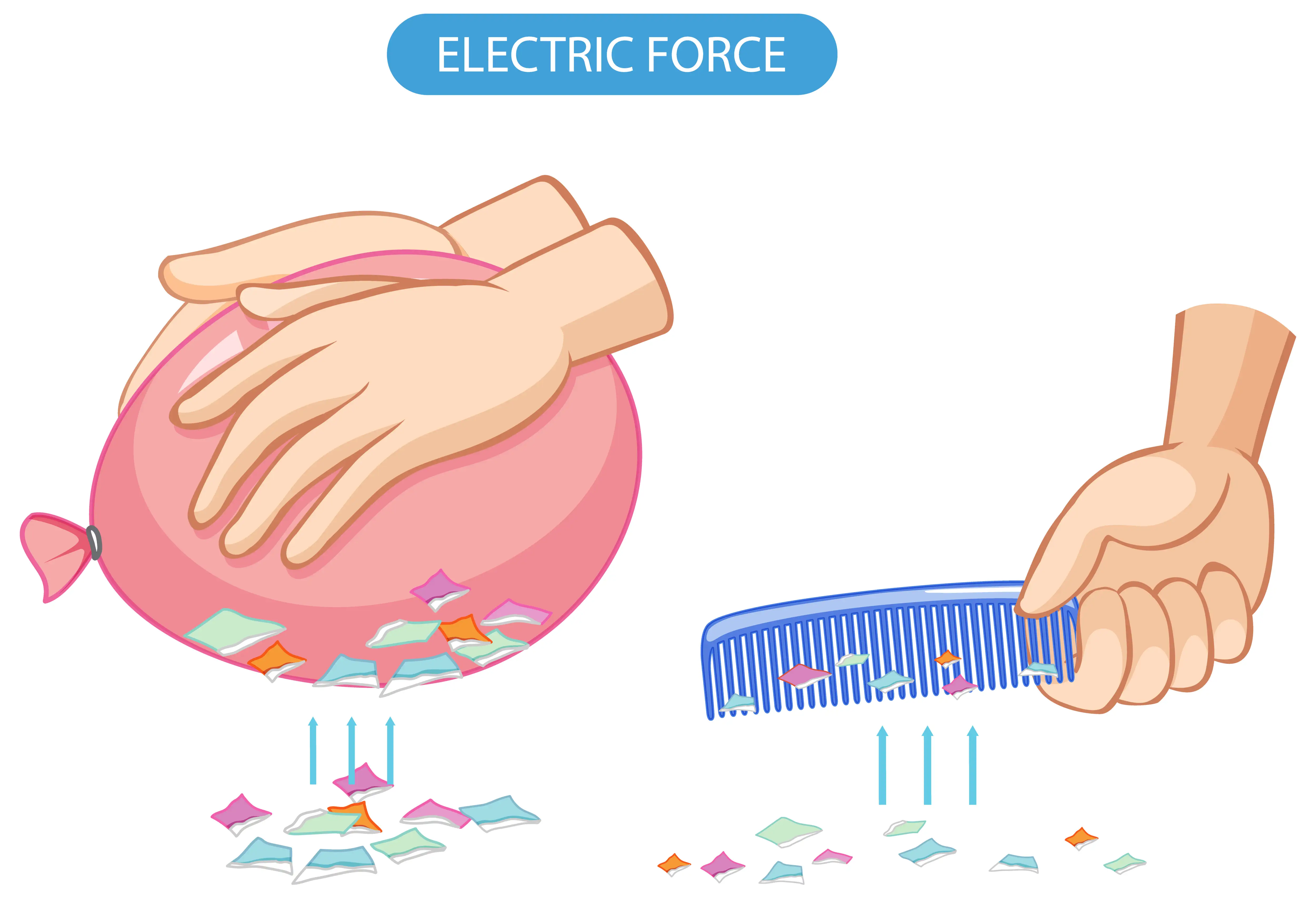
Static Electricity is yet another decisive criteria that cannot be brushed aside when selecting & filling containers with chemicals.Static electricity is generated when there is friction between two non conductive surfaces during motion . Chances of static electricity building up is during filling up . The basic rule that needs to be kept in mind and strictly followed is that all flammable liquids like benzene, mineral spirits, toluene etc. need to be filled in metal containers as static electricity generated will be conducted by the metal & dissipated. Water soluble solvents in general do not develop static electricity and are quiet safe to be kept in plastic containers. However there should be thorough under standing on the nature of chemicals and appropriate measures taken. Proper earthing is crucial to avoid fire hazards due to generation of static electricity.
Safety is of utmost priority when compared to any other criteria, so perfect parameters drawn for each chemical has to be strictly followed. If alternate options are suggested only then cost effective containers can be chosen.