Introduction – The Silent Spark Behind Industrial Accidents
We’ve all felt a small zap when touching a doorknob or seen lightning streak across the sky. That’s static electricity — fascinating in daily life but potentially catastrophic in a chemical plant.
In industries where solvents and flammable liquids are handled, static electricity can silently build up and discharge as a spark powerful enough to ignite vapors. At Pon Pure Chemicals Group, we treat static control not as an afterthought but as a core pillar of operational safety.
What Is Static Electricity?
Electricity is the movement of electrons — negatively charged particles. Static electricity occurs when electric charge builds up on the surface of a material and remains there instead of flowing away.
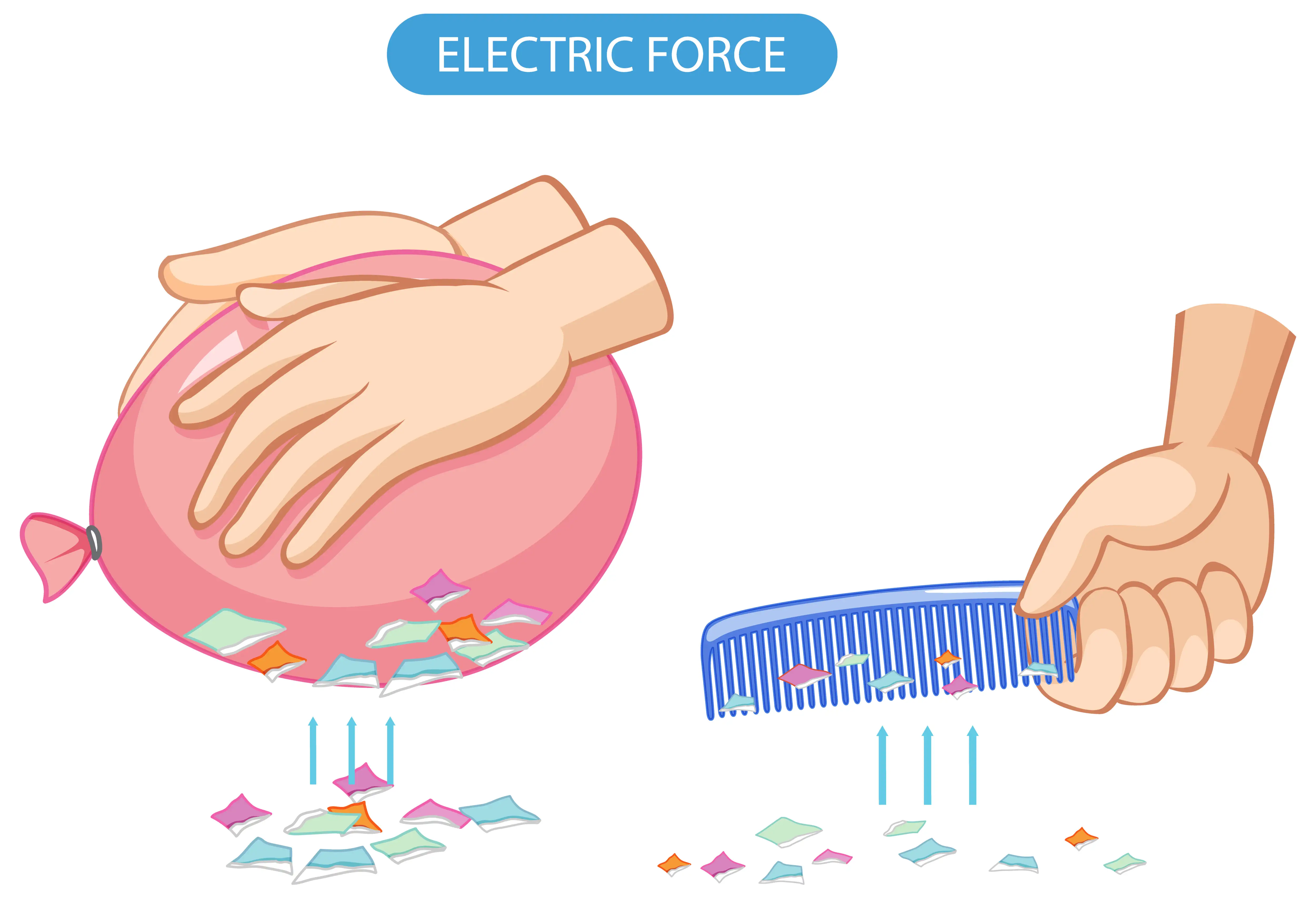
When two different materials contact and separate, they exchange electrons, leaving one surface positively charged and the other negatively charged. Because these charges don’t move freely, they are “static.”
 Static Electricity
- Rubbing a balloon on your hair and sticking it to a wall
- The spark you feel after walking on carpet
- Lightning — nature’s largest static discharge
In chemical environments, however, such discharges can be disastrous.
How Static Charge Builds Up During Solvent Handling
During pumping, stirring, or pouring of liquids, friction and flow separate electrical charges between the liquid and its container.
- The container (metal tank, pipe, or drum) can be quickly discharged through proper earthing.
- The liquid retains its charge for longer — its rate of discharge depends on its conductivity.
In solvents with low conductivity, such as hydrocarbons or alcohols, static charges can accumulate rapidly. When the charge difference becomes large enough, the air between charged surfaces breaks down, producing a spark that can ignite vapors.
 Static electricity generated during liquid transfer in pipelines.
Electrical Conductivity of Common Solvents
The rate at which static charge dissipates depends largely on a liquid’s conductivity. Liquids with low conductivity (non-conductive) can store charge longer and pose greater ignition risk.
Table 1: Conductivity Classification of Typical Solvents
| Chemicals | Conductivity (pS/m) | Category |
|---|---|---|
| Methanol | 7,000,000 | Conductive |
| Acetone | 6,000,000 | Conductive |
| Methyl Ethyl Ketone | 5,000,000 | Conductive |
| n-Butanol | 4,000,000 | Conductive |
| Ethanol | 4,000,000 | Conductive |
| Iso Propanol | 2,000,000 | Conductive |
| Ethyl Acetate | 2,000,000 | Conductive |
| n-Butyl Acetate | 2,000,000 | Conductive |
| n-Hexane | 24 | Non-Conductive |
| n-Pentane | 24 | Non-Conductive |
| m-Xylene | 9 | Non-Conductive |
| n-Octane | 9 | Non-Conductive |
| Toluene | 5 | Non-Conductive |
| n-Heptane | 4 | Non-Conductive |
Category Reference:
Conductive: >10,000 pS/m
Semi-conductive: 100 – 10,000 pS/m
Non-conductive: <100 pS/m
Why Static Is Dangerous – The Chemistry of Ignition
Most industrial solvents easily form flammable vapor-air mixtures at room temperature.
Table 2: Flammability Characteristics of Common Solvents
| Substance | Closed Flash Point (°C) | LEL (% v/v) | UEL (% v/v) | Auto-Ignition Temp (°C) |
|---|---|---|---|---|
| Pentane | -49 | 1.5 | 7.8 | 285 |
| n-Hexane | -22 | 1.2 | 7.5 | 233 |
| Acetone | -18 | 2.6 | 12.8 | 485 |
| Iso-Octane | -12 | 1.1 | 6 | 411 |
| Benzene | -11 | 1.4 | 7.1 | 560 |
| Methyl Ethyl Ketone | -7 | 1.8 | 11.5 | 505 |
| Ethyl Acetate | -4 | 2.2 | 11.4 | 460 |
| n-Heptane | -4 | 1.2 | 6.7 | 215 |
| Toluene | 4 | 1.3 | 7 | 535 |
| Methanol | 10 | 7.3 | 36 | 455 |
| Iso-Propanol | 12 | 2 | 12 | 425 |
| Ethanol | 13 | 3.3 | 19 | 365 |
| n-Octane | 13 | 1 | 3.2 | 210 |
| n-Butyl Acetate | 24 | 1.7 | 15 | 370 |
| m-Xylene | 25 | 1.1 | 7 | 525 |
| n-Nonane | 31 | 0.74 | 2.9 | 205 |
| n-Butanol | 35 | 1.4 | 11.2 | 340 |
These figures show that many common solvents ignite well below ambient temperature, making static discharge control essential for plant safety.
Preventing Static Hazards – Best Practices for Safety
1. Reduce Charge Generation
- Avoid free-fall filling — extend fill pipes to the bottom of tanks.
- Keep transfer velocity low and minimize agitation.
- Avoid pouring powders directly into flammable liquids.
2. Promote Safe Dissipation
- Use conductive or static-dissipative containers and hoses.
- Ensure bonding and grounding between all equipment.
- Add antistatic agents for low-conductivity liquids if compatible.
 Operators wearing static-dissipative PPE and following signage in solvent-handling areas.
3. Inertisation and Temperature Control
- Operate at least 5°C below flash point of solvent.
- Allow 3-minute relaxation time after agitation before sampling.
4. Personnel Protection
- Use static-dissipative footwear and gloves.
- Ensure floors are conductive and grounded.
- Test footwear resistance regularly using a footwear tester.
5. Equipment and Facility Controls
- Use only explosion-protected electrical equipment.
- Display Static Hazard and No Smoking signage.
- Keep forklifts and vehicles in hazardous zones flameproof.
Grounding and Maintenance
A robust grounding system is the backbone of static control:
- Maintain dedicated static earth pits (not shared with electrical ground).
- Keep resistance below 1 ohm.
- Inspect clamps and cables for rust or looseness.
- Conduct resistance testing every six months to ensure continuity.
Conclusion – Safety Is a Continuous Current
Static electricity may be invisible, but its impact can be explosive. With the right combination of engineering design, preventive maintenance, and operator training, we can neutralize the hidden spark that causes many solvent-handling incidents.
“Safety is nothing but common sense with presence of mind.”
To learn more about our industrial safety practices and chemical handling expertise, visit www.pure-chemical.com.